
Published on November 28, 2025
Systematic Approaches to Risk Evaluation for Business Assets in Singapore
A comprehensive examination of quantitative and qualitative assessment techniques, documentation standards, and regulatory reporting requirements for corporate asset protection in Singapore's business environment.
Introduction to Risk Evaluation Frameworks
Risk evaluation represents a fundamental component of corporate asset management in Singapore's regulated business environment. Organizations operating across manufacturing, logistics, and service sectors must implement systematic methodologies to identify, assess, and document potential exposures that could impact operational continuity and financial stability. The regulatory framework established by the Monetary Authority of Singapore (MAS) and related governmental bodies requires businesses to maintain comprehensive risk assessment protocols that align with international standards while addressing jurisdiction-specific requirements.
Contemporary risk evaluation approaches integrate both quantitative metrics and qualitative assessments to provide organizations with a complete understanding of their exposure profile. Quantitative methods utilize statistical analysis, historical loss data, and probabilistic modeling to assign numerical values to potential risks. Qualitative techniques incorporate expert judgment, scenario analysis, and stakeholder consultation to evaluate risks that may not be easily quantifiable. The combination of these methodologies enables businesses to develop robust risk management strategies that address both measurable and subjective risk factors.
Singapore's business landscape presents unique considerations for risk evaluation due to the nation's position as a regional commercial hub, its exposure to international supply chain dynamics, and its stringent regulatory environment. Organizations must account for factors including property values in high-density urban areas, liability exposures in multi-tenant commercial buildings, business interruption risks associated with global trade dependencies, and compliance obligations under various statutory frameworks. Effective risk evaluation requires understanding these contextual elements and incorporating them into assessment protocols.
The systematic approach to risk evaluation begins with asset identification and classification. Organizations must maintain detailed inventories of physical assets, including real property, equipment, inventory, and infrastructure. Each asset category requires specific evaluation criteria based on replacement cost, operational criticality, and exposure to various perils. This foundational step ensures that subsequent risk assessment activities address all material exposures and provide management with complete visibility into the organization's risk profile.
Quantitative Assessment Techniques
Quantitative risk assessment employs mathematical and statistical methods to measure potential losses and assign probability values to risk events. The fundamental equation for risk quantification expresses expected loss as the product of probability and severity: Expected Loss = Probability of Occurrence × Magnitude of Impact. This formula provides a baseline for comparing different risks and prioritizing mitigation efforts based on objective criteria. Organizations typically express quantitative risk metrics in monetary terms, enabling direct comparison with risk transfer costs and facilitating cost-benefit analysis of risk management interventions.
Historical loss analysis forms a critical component of quantitative assessment. Organizations should maintain comprehensive records of past incidents, including property damage, liability claims, business interruptions, and other loss events. Statistical analysis of this historical data reveals patterns, trends, and correlations that inform future risk projections. Key metrics include loss frequency (number of events per time period), loss severity (average cost per event), and aggregate loss distributions. These metrics enable organizations to establish baseline expectations and identify deviations that may indicate changing risk conditions.
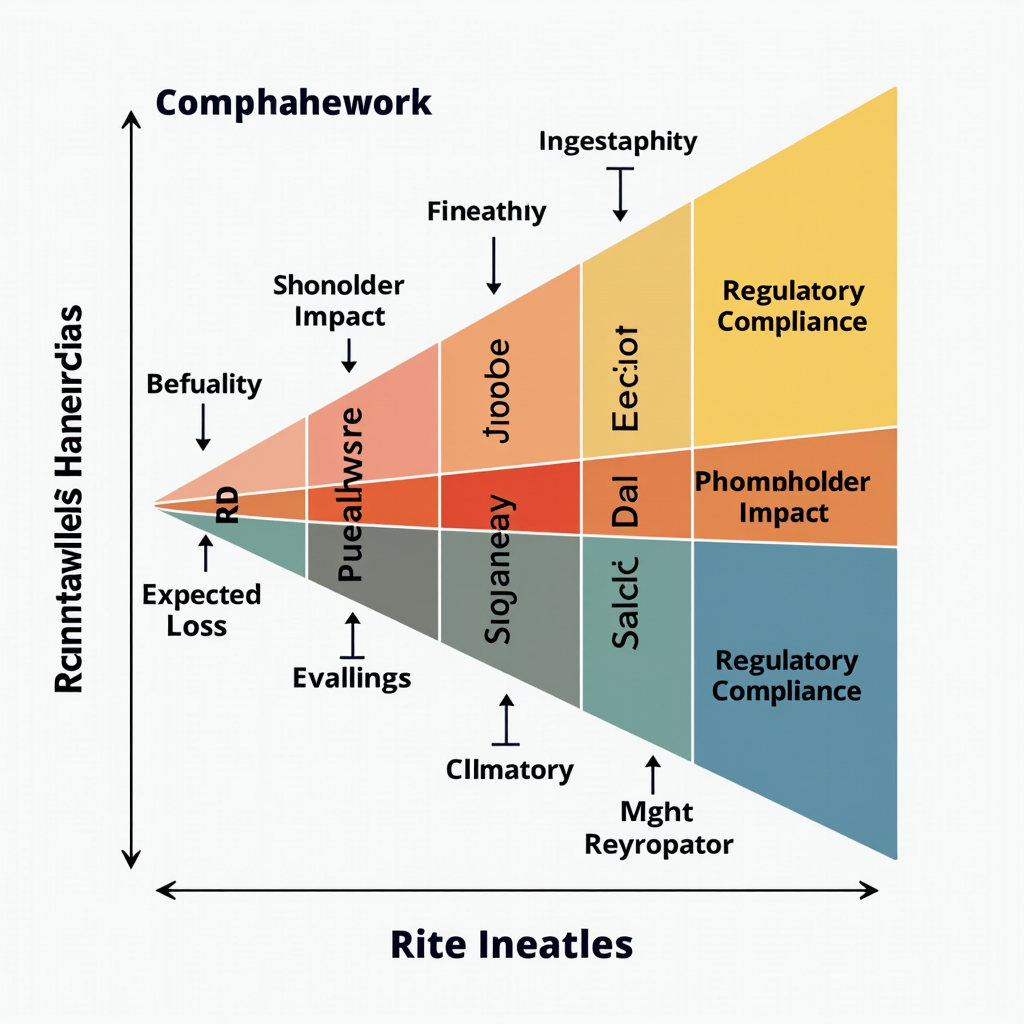
Probabilistic modeling techniques, including Monte Carlo simulation and scenario analysis, allow organizations to evaluate complex risk situations involving multiple variables and interdependencies. These methods generate probability distributions for potential outcomes rather than single-point estimates, providing decision-makers with a more complete understanding of uncertainty. For example, a manufacturing facility might model the combined impact of equipment failure rates, supply chain disruptions, and market demand fluctuations to assess business interruption exposure. The resulting probability distribution indicates the range of possible losses and their associated likelihoods.
Value-at-Risk (VaR) and Conditional Value-at-Risk (CVaR) represent advanced quantitative metrics used to express risk exposure at specific confidence levels. VaR indicates the maximum expected loss over a defined time horizon at a given confidence level (e.g., 95% or 99%). CVaR, also known as Expected Shortfall, measures the average loss in scenarios that exceed the VaR threshold. These metrics prove particularly valuable for organizations seeking to align risk retention levels with their financial capacity and risk tolerance. Singapore-based businesses often utilize these metrics when determining appropriate coverage limits and deductible structures for general insurance programs.
Qualitative Assessment Methodologies
Qualitative risk assessment addresses exposures that resist precise numerical quantification, including reputational risks, regulatory compliance uncertainties, and emerging threats without sufficient historical data. These methodologies rely on structured expert judgment, systematic evaluation frameworks, and stakeholder consultation to characterize risk severity and likelihood. Common qualitative scales employ descriptive categories such as "low," "medium," "high," and "critical" for both probability and impact dimensions, often represented in risk matrices that facilitate visual communication of the organization's risk landscape.
The risk matrix approach plots individual risks on a two-dimensional grid with probability on one axis and impact on the other. This visualization enables rapid identification of high-priority risks requiring immediate attention and lower-priority exposures that may be accepted or monitored. Organizations should establish clear criteria for assigning risks to specific matrix positions, ensuring consistency across different business units and assessment periods. In Singapore's regulatory context, qualitative assessments must consider compliance obligations under various statutory frameworks, including workplace safety regulations, environmental protection requirements, and industry-specific standards.
Scenario analysis represents a structured qualitative technique that examines potential risk events through detailed narrative descriptions. Subject matter experts develop plausible scenarios describing how specific risks might materialize, the sequence of events that could unfold, and the resulting impacts on the organization. This approach proves particularly valuable for evaluating complex, low-probability but high-impact events such as major supply chain disruptions, catastrophic property damage, or significant liability claims. Scenario analysis encourages comprehensive thinking about risk interdependencies and cascading effects that might not be apparent through other assessment methods.
Stakeholder consultation enhances qualitative risk assessment by incorporating diverse perspectives from individuals with different organizational roles and expertise. Risk workshops bringing together operations personnel, financial managers, legal advisors, and external consultants can identify exposures that might be overlooked in desk-based analysis. These collaborative sessions also facilitate discussion of risk appetite, tolerance levels, and mitigation priorities. For organizations operating in Singapore's multi-cultural business environment, stakeholder consultation should account for different communication styles and ensure all relevant voices contribute to the risk evaluation process.
Documentation Standards and Regulatory Reporting
Comprehensive documentation forms the foundation of effective risk evaluation and regulatory compliance. Organizations must maintain detailed records of their risk assessment methodologies, data sources, analytical procedures, and conclusions. Documentation standards should specify required elements including risk identification worksheets, assessment matrices, quantitative analysis outputs, mitigation action plans, and periodic review schedules. Well-structured documentation serves multiple purposes: it provides an audit trail for regulatory examinations, facilitates knowledge transfer during personnel transitions, and enables continuous improvement of risk management processes.
Singapore's regulatory framework requires certain organizations to submit formal risk assessments to governmental authorities. The specific reporting obligations vary by industry sector and organizational characteristics. Manufacturing facilities may need to document fire safety risk assessments and submit them to the Singapore Civil Defence Force. Organizations handling hazardous materials must comply with reporting requirements under the Environmental Protection and Management Act. Service sector businesses operating in regulated industries face sector-specific documentation and reporting obligations. Understanding these requirements and incorporating them into risk evaluation protocols ensures compliance and avoids potential penalties.
Risk registers represent a standardized documentation tool that consolidates risk information in a structured format. A comprehensive risk register typically includes columns for risk description, category, probability rating, impact rating, current controls, residual risk level, mitigation actions, responsible parties, and target completion dates. Organizations should maintain risk registers at multiple levels—enterprise-wide, business unit-specific, and project-based—with appropriate aggregation and reporting mechanisms. Regular updates to risk registers ensure that risk information remains current and reflects changing business conditions.
Board-level reporting of risk assessment results represents a critical governance requirement. Directors and senior management require concise, actionable risk information to fulfill their oversight responsibilities and make informed strategic decisions. Risk reports for board consumption should highlight material exposures, significant changes in the risk profile, emerging threats, and the status of major mitigation initiatives. These reports should balance technical rigor with accessibility, using visual aids such as heat maps and trend charts to communicate complex information effectively. In Singapore's corporate governance environment, boards increasingly expect regular risk reporting as part of their fiduciary duties.
Industry-Specific Considerations
Manufacturing sector organizations face distinctive risk evaluation challenges related to production equipment, inventory management, and supply chain dependencies. Risk assessment for manufacturing operations must address machinery breakdown exposures, including the potential for extended business interruption if critical equipment fails. Inventory risks encompass both physical damage to raw materials and finished goods, as well as obsolescence and spoilage concerns. Manufacturing facilities in Singapore's industrial estates should evaluate risks associated with shared infrastructure, neighboring operations, and access to transportation networks. The concentration of high-value equipment and inventory in relatively compact facilities requires careful attention to property protection measures and business continuity planning.
Logistics and warehousing operations present unique risk profiles characterized by high inventory turnover, goods in transit exposures, and liability risks associated with handling third-party property. Risk evaluation for logistics businesses must account for the dynamic nature of inventory values, which can fluctuate significantly based on seasonal patterns and client activity. Transit risks require assessment of transportation modes, route characteristics, and cargo security measures. Warehouse operations face exposures including fire, theft, and damage from handling equipment. Singapore's position as a regional logistics hub means that many warehousing operations handle high-value goods destined for multiple markets, amplifying the potential severity of loss events.
Service sector businesses, while generally facing lower property risk exposures than manufacturing or logistics operations, must carefully evaluate professional liability and cyber risk exposures. Professional service firms including consultancies, accounting practices, and technology service providers face potential claims arising from errors, omissions, or failure to meet client expectations. Risk assessment should examine the nature of client engagements, contractual obligations, quality control procedures, and professional indemnity requirements. Cyber risks have become increasingly material for service businesses that handle sensitive client data or rely on digital infrastructure for service delivery. Evaluation of cyber exposures should address both first-party costs (business interruption, data restoration) and third-party liabilities (privacy breaches, regulatory penalties).
All industry sectors operating in Singapore must consider the specific characteristics of the local business environment when conducting risk evaluations. The tropical climate presents elevated risks of water damage from heavy rainfall and humidity-related deterioration of sensitive equipment and inventory. Singapore's high population density and land scarcity result in premium property values and potential for significant business interruption losses if facilities become inaccessible. The nation's strict regulatory environment across workplace safety, environmental protection, and data privacy domains creates compliance risks that require systematic evaluation and mitigation. Organizations should incorporate these Singapore-specific factors into their risk assessment frameworks to ensure comprehensive coverage of material exposures.
Loss Prevention Strategies and Compliance
Loss prevention represents the proactive component of risk management, focusing on reducing the probability and severity of adverse events through systematic controls and safeguards. Effective loss prevention programs integrate physical security measures, operational procedures, employee training, and technology solutions. Organizations should prioritize loss prevention investments based on risk assessment findings, directing resources toward controls that address the most significant exposures. The relationship between loss prevention and general insurance coverage is complementary: robust loss prevention measures can reduce insurance costs while insurance provides financial protection against residual risks that cannot be economically eliminated.
Physical security controls for property protection include fire detection and suppression systems, intrusion alarms, access control mechanisms, and environmental monitoring equipment. Singapore's building codes and fire safety regulations establish minimum standards for these systems in commercial properties. Organizations should evaluate whether regulatory minimum standards provide adequate protection given their specific risk profile, potentially implementing enhanced measures for high-value or critical assets. Regular testing and maintenance of physical security systems ensures their reliability when needed. Documentation of testing and maintenance activities provides evidence of due diligence for regulatory compliance and insurance underwriting purposes.
Operational procedures and employee training constitute essential elements of loss prevention programs. Written procedures should address critical activities including equipment operation, hazardous material handling, emergency response, and incident reporting. Regular training ensures that employees understand their responsibilities and can execute procedures effectively. Organizations should document training activities, including participant lists, topics covered, and assessment results. This documentation demonstrates compliance with regulatory training requirements and provides evidence of organizational commitment to loss prevention. In Singapore's multi-lingual workforce environment, training materials should be available in appropriate languages to ensure comprehension across all employee groups.
Compliance with Singapore's regulatory framework represents both a legal obligation and a risk management imperative. Non-compliance can result in financial penalties, operational restrictions, and reputational damage. Organizations should maintain compliance monitoring systems that track regulatory requirements, assess current compliance status, and identify gaps requiring remediation. Key regulatory areas affecting risk management include workplace safety and health (administered by the Ministry of Manpower), environmental protection (National Environment Agency), fire safety (Singapore Civil Defence Force), and data protection (Personal Data Protection Commission). Regular compliance audits, conducted by internal staff or external consultants, provide assurance that organizational practices align with regulatory expectations.
Conclusion and Professional Resources
Systematic risk evaluation provides organizations with the foundation for informed decision-making regarding asset protection and business continuity. The integration of quantitative and qualitative assessment techniques enables comprehensive understanding of exposure profiles across diverse risk categories. Adherence to documentation standards and regulatory reporting requirements ensures compliance with Singapore's governance framework while creating valuable organizational knowledge assets. Industry-specific considerations allow organizations to tailor risk evaluation approaches to their unique operational characteristics and exposure patterns.
Organizations seeking to enhance their risk evaluation capabilities should consider engaging professional advisors with expertise in Singapore's regulatory environment and industry-specific risk characteristics. General insurance agencies registered with the Monetary Authority of Singapore can provide valuable insights into risk assessment methodologies, loss prevention strategies, and coverage solutions aligned with organizational needs. Professional guidance ensures that risk evaluation processes incorporate current best practices and comply with evolving regulatory expectations.
Professional Consultation
GAF Trading Pte Ltd operates as a registered general insurance agency (GIA code: C005833) providing professional advisory services for corporate risk management and asset protection in Singapore. Our team assists organizations across manufacturing, logistics, and service sectors in developing systematic risk evaluation frameworks aligned with regulatory requirements and industry best practices.
Contact Information:
GAF Trading Pte Ltd
515 Woodland Drive 14 #05-153
Singapore
Phone: [protected]